Table Of Content

It means not only is your design process constant, but users will also develop familiarity with the site because it caters to their intuition and experience. Because the atoms and templates are not brand-specific, they are reusable. As a designer, it means you develop a consistency that translates to expectation when looking for contracts or clients. Front-end frameworks are tools that provide a specific solution and a particular look and feel. While those solutions help speed up development, the resulting experiences end up resembling those sci-fi jumpsuits. When everyone uses the same buttons, grids, dropdowns, and components, things naturally start to look the same.
> molecules-search
The page stage is essential as it’s where we test the effectiveness of the design system. Viewing everything in context allows us to loop back to modify our molecules, organisms, and templates to better address the real context of the design. Molecules give us some building blocks to work with, and we can now combine them together to form organisms. Organisms are groups of molecules joined together to form a relatively complex, distinct section of an interface. A lot has been said about creating design systems, and much of it focuses on establishing foundations for color, typography, grids, texture and the like.
An empathetic workflow
It’s these questions that we’ve been asking ourselves more and more now that we’re sending our interfaces to more and more places. Publishing content for the Web used to be a fairly straightforward endeavor, as the desktop web was the only game in town. Today, our content is consumed by a whole slew of smartphones, dumb phones, netbooks, notebooks, tablets, e-readers, smartwatches, TVs, game consoles, digital signage, car dashboards, and more. To address this reality while maintaining our sanity, it’s absolutely necessary for us to take a step back and break these giant responsibilities into smaller, more manageable chunks. Right now, our entire industry is drowning in a sea of devices, viewport sizes, and online environments. As for the 30,000-page university website, it might be tempting to declare, “Thousands of pages?!
Providing context with pattern lineage

The underline is shifted 5px (0.3em) below the baseline of the text, ensuring that it does not overlap with the descenders of characters like j, y, g, q, and p. This adjustment is achieved using the CSS text-underline-offset property. For more on why underlining is discouraged in design, you can refer to resources such as the GOV.UK accessibility blog, W3C guidelines, and the University of Hamburg’s research on UX ideas.
Organisms
The point is to view a website as a mixture of separate processes, all the way down to the atom. It engages designers to view user experience and workflow from a microlens, expanding until they understand the implications in a macro sense. Interface elements comprise pages and entire sites, so if you attempt to work with a collection of items without considering how it impacts smaller pieces, you may compromise performance or accessibility.
Maintaining Design Systems
NIST's New Compact Atomic Clock Design Uses Cold Atoms to Boost Precision - NIST
NIST's New Compact Atomic Clock Design Uses Cold Atoms to Boost Precision.
Posted: Tue, 05 Nov 2013 08:00:00 GMT [source]
As we’ll discuss throughout this book, the way things are named very much impacts how they’re perceived and utilized. Thinking of the web as pages has real ramifications on how people interact with web experiences, and influences how we go about creating web interfaces. On the left we see the UI’s content skeleton, which consists of the same person block molecule repeated again and again. On the right we see what happens when we populate each instance of the person block molecule with representative content. Visualizing the content skeleton and the representative final content allows us to create patterns that accurately reflect the content that lives inside them. If a person’s name were to wrap onto five lines within the pattern, we would need to address that broken behavior at a more atomic level.
Elsewhere is a display meant to honor the Japanese people killed and injured by Fat Man and Little Boy, a smaller bomb dropped on Hiroshima three days earlier. Together, they killed more than 200,000 people by some estimates, effectively ending World War II. To create more robust and resilient designs, we need to concurrently account for the best situations and the worst – and everything in between. Before we dive into the nuts and bolts of how Pattern Lab works, it’s important to take time to explain what the tool is and isn’t. “I’m looking at the distinctions of those 1% elements in the mechanisms of the recrystallization process – different furnace temperatures for various times.
The key idea behind Atomic Design is that it breaks down the design of a website or application into smaller, reusable components. As you can see, atomic design elements build upon its essential parts. The idea is that atoms join to create more holistic and versatile web experiences, primarily when they work together to enhance each other’s strengths and properties. Examples include contact forms that incorporate atoms like buttons and fonts. Atomic design is a methodology for creating deliberate, hierarchical user interface design systems.
Applying and Experimenting With Design Components
Organizations are recognizing the need to create modularized content to better reach their audience wherever they may be. And content management systems are evolving beyond their web publishing platform roots into tools that can elegantly create and maintain modular content. We're tasked with making interfaces for more users in more contexts using more browsers on more devices with more screen sizes and more capabilities than ever before. Pages are specific instances of templates that show what a UI looks like with real representative content in place.
The above example shows a list of stocks of two different users on the RobinHood app. Based on user selection, the atoms and molecules take on different states. Defining a page is as equally important as atoms and molecules when building a design system. In the above example, you can see atoms in action as individual UI elements.
There’s no doubt style guides help teams effectively get things done in the here and now. The beautiful thing about interface design systems is that they can and should be modified, extended, and refined for years to come. While brand identity guidelines are fairly tactile, design language guidelines are a bit harder to pin down.
At this stage, design teams will have templates that show the general patterns of the relevant pages. Product pages, search results pages, home pages and so on will all have their respective templates that show the content structure and general look for later use. This can be very practical for products that are constantly expanding, with the templates helping the team create new pages quickly and maintain consistency throughout. Equipped with the established patterns and organisms, designers have to put it all together to create the general content structure of the pages that will form the entire product. What do all of these design concepts have to do with Atomic Design molecules? In a way, they all seek to help designers create component molecules in a way that users can understand and enjoy.
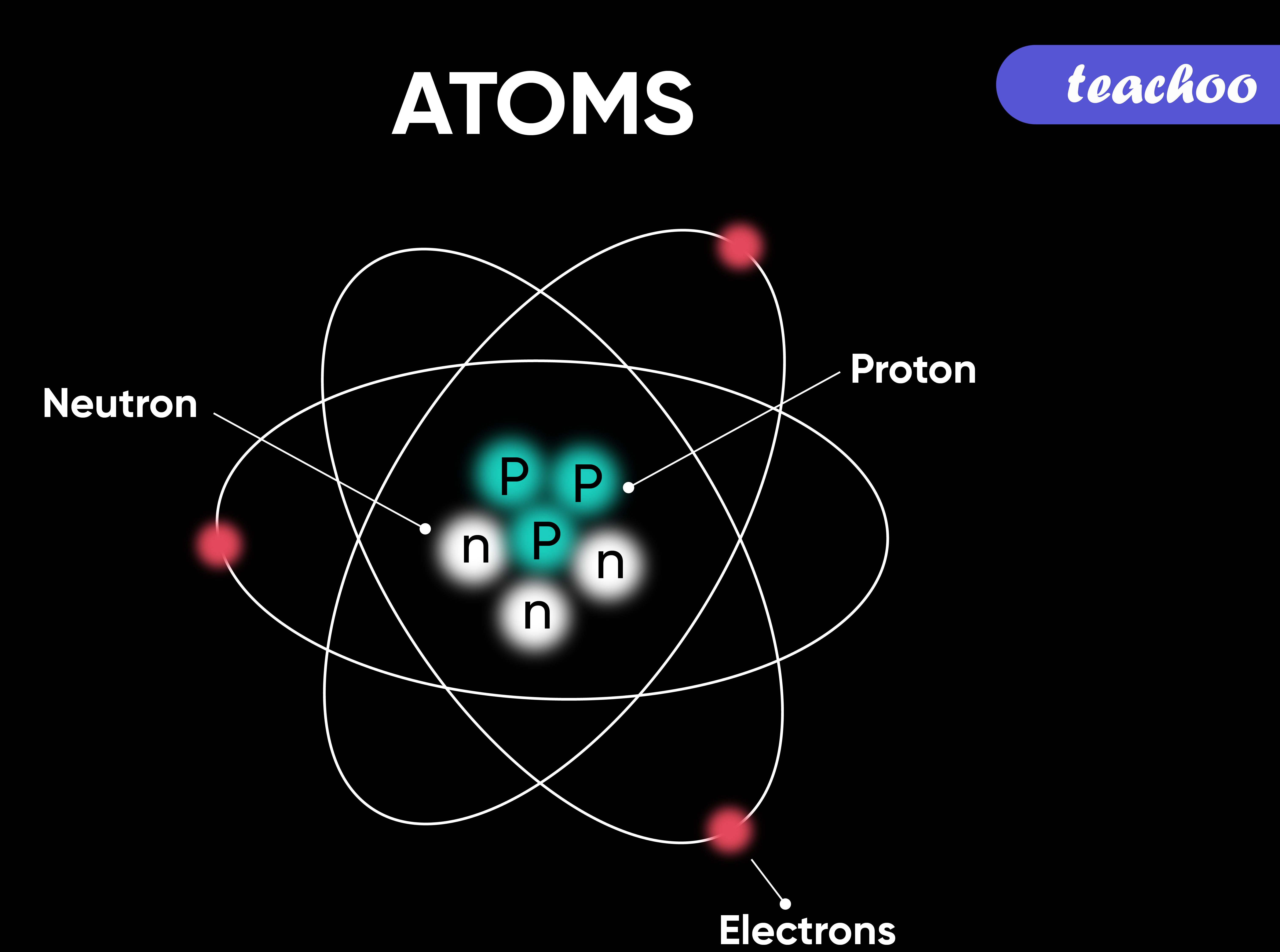
A hydrogen atom contains one electron, while a helium atom contains two. In the same manner, each interface atom has its own unique properties, such as the dimensions of a hero image, or the font size of a primary heading. These innate properties influence how each atom should be applied to the broader user interface system.
Apparently Mr. Rae’s strategy of having students mind-numbingly balance tons of chemical equations worked, because I’m coming back to it all these years later for inspiration on how to approach interface design. The multitude of devices now accessing the web has forced designers to re-embrace the intrinsic fluidity of the medium. Thankfully, techniques like responsive web design allow us to create layouts that look and function beautifully on any screen. How do we address all manner of UI variation without exhausting ourselves in the process? Pattern Lab’s pseudo-pattern feature allows us to articulate sometimes wildly different scenarios with just a few changes to our data. To start, he prepared the niobium alloy samples for recrystallization, flattening them, and then using a glass-blowing technique to encapsulate them.
In contrast, less skilled readers may need to decipher words letter by letter, which can slow down the reading process and increase the likelihood of misrecognizing words. This difficulty in word recognition can lead to a disjointed understanding of sentences, as they struggle to make sense of individual words that do not fit together logically. As a result, confusion rather than comprehension may arise when less skilled readers encounter text with complex formatting, such as underlined words or excessive use of in-text links. Fast forward 30 odd years, and now placing an underline under a link text is a familiar and globally recognisable UI pattern.
Everyone’s design process is different, so I’ll also discuss how to introduce and integrate atomic design into cross-disciplinary Web design teams. I’ll also provide practical advice for getting buy-in from colleagues and clients. Though rebranding a website by changing a template in one fell swoop is tempting, atomic design reminds designers to take a step back to view the atoms first. It encourages designers to invest time and effort into creating this entire system so that in the final stages of the product design, things can be done with agility in a practical way. As we here at Justinmind head from a Product Manager at Yelp, designing for scale isn’t easy. It takes planning and a well-kept design system that allows a product to grow without losing its soul.